 Skip to content

The property market is undergoing a paradigm shift: field experience and local knowledge remain important, but today, digital tools that increase predictive capabilities, reduce timeframes and improve risk control are coming into play to guide real estate investment decisions.
This transformation has a specific name: PropTech, which refers to the set of technologies that are redefining the way real estate assets are purchased, managed and valued. We are talking about artificial intelligence, advanced data analysis, blockchain, tokenisation, automation through smart contracts, digital twins and augmented reality. Each of these solutions is changing the sector in a profound and concrete way.
PropTech for better forecasting, earlier management
artificial intelligence and machine learning
Artificial intelligence (AI) and machine learning (ML) models now make it possible to accurately estimate future rents, returns and trends by cross-referencing structured data (historical prices, property characteristics, demographic data) and unstructured data (images, social media, local news). According to a report by Knight Frank, these predictive models achieve over 90% accuracy in estimating rents for the residential segment.
Platforms such as Skyline AI and Zillow in the United States use these systems to identify properties that are undervalued relative to their potential, alerting investors to where to intervene before the market does ( 1 ).
Of course, there are limitations: the quality of predictions depends on the quality of the data, and there are cases where algorithms have shown systemic bias, for example by undervaluing properties in ethnically diverse neighbourhoods. For this reason, artificial intelligence should be considered a support tool, not an automatic truth.
Alongside AI, the spread of data analytics has introduced a systematic approach to monitoring asset performance. Advanced dashboards, IoT sensors and benchmarking models transform raw data into useful indicators for timely intervention: rising vacancy rates, signs of stress on a portfolio, rebalancing opportunities. This shift from reactive to proactive enables more efficient management and better protection against downside risk, but requires investment in infrastructure, data governance and specific skills that not all organisations yet possess.
More access, more speed, more control
property investments and digital tokens
Blockchain and tokenization, on the other hand, promise a more liquid and accessible real estate market. Converting the value of a property into digital tokens means splitting up the investment, lowering the entry thresholds, and creating secondary markets where shares can be bought and sold without the traditional red tape. On an operational level, the technology offers traceability and transparency; on a strategic level, it broadens the pool of potential investors. But the road ahead is still to be built: large-scale adoption faces regulatory uncertainties, the need for reliable platforms, and the issue of effective liquidity in the secondary market. Until a critical mass of participants is reached and the regulatory framework is clarified, tokenization will remain a promising but partial opportunity.
Smart contracts and automation are part of this ecosystem, streamlining processes that traditionally require time and intermediaries: escrows, distribution of proceeds, and enforcement of contractual clauses. Automating certain steps can reduce costs and speed up closings, but it raises legal and liability issues that jurisdictions are only now beginning to regulate. In addition, code security is crucial: a bug in a smart contract can have consequences that are difficult to remedy without clear legal and technical options.
Digital twin and augmented reality
model, simulate, and visualize
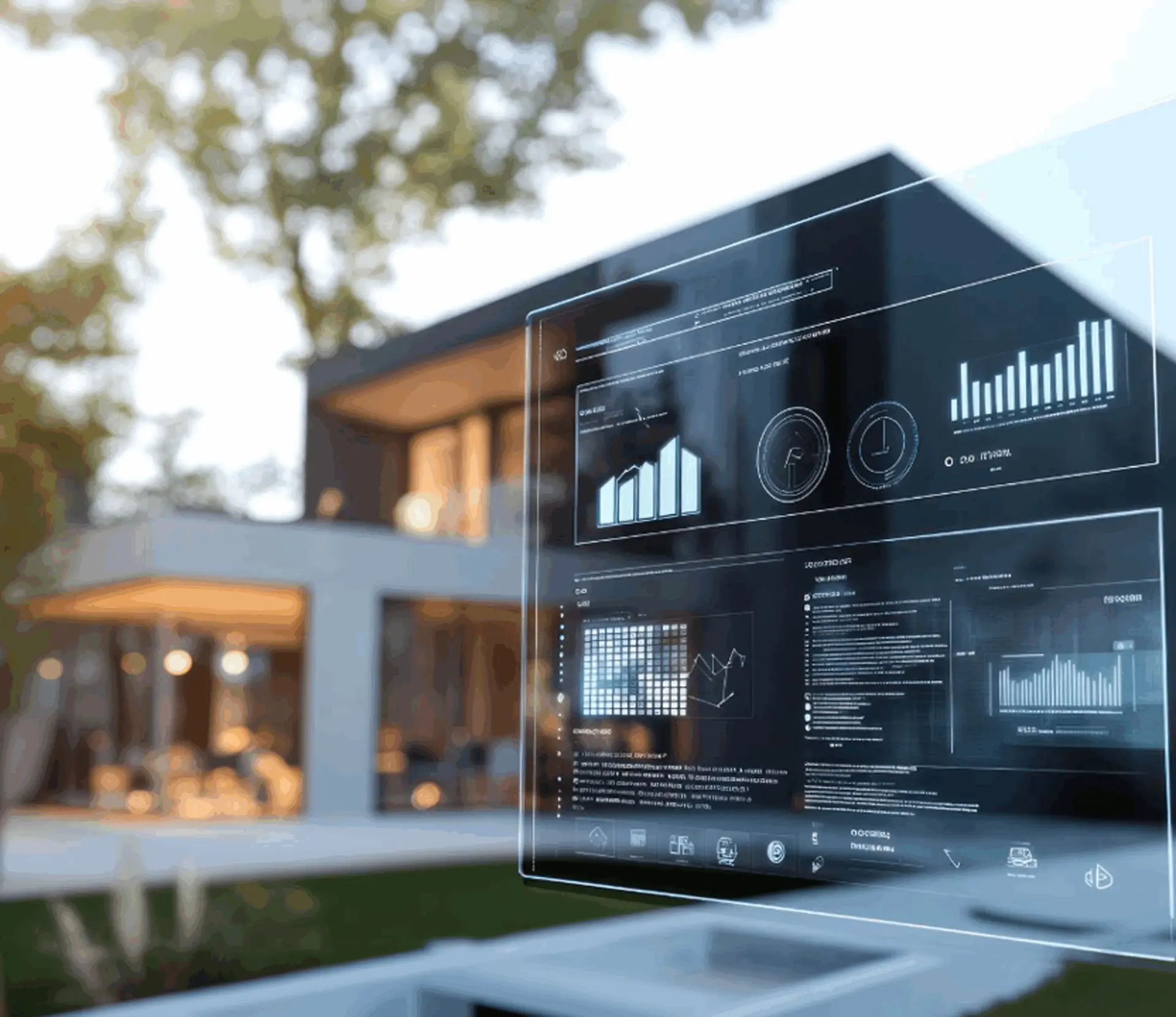
Finally, digital twins and augmented reality bring the ability to dynamically model, simulate, and visualize assets to real estate. A digital twin of a building allows you to test energy efficiency scenarios, predict maintenance interventions, and evaluate design impacts before physically intervening. For investors, this translates into more detailed information on potential value and actual management costs. For sellers or developers, it offers unprecedented opportunities for marketing and stakeholder engagement. However, creating and maintaining a twin requires data, tools, and expertise: for the time being, it is a resource that is mainly available to large portfolios and complex projects.
The common denominator of these technologies is the promise of greater efficiency, transparency, and predictive power. For investors, this potentially means better returns and more controlled risks; for operators, it means streamlined processes and new ways of accessing capital. But technology does not eliminate uncertainty or replace experience: it introduces new elements to be managed, requires skills, and demands a critical reading of the evidence produced. The most effective adoption will therefore be one that integrates digital tools with a solid governance approach, constant verification of data quality, and a realistic assessment of regulatory and technical limitations.
In a historically cautious sector, the challenge is not to choose between “digital” and “tradition,” but to learn how to make them work together. Those who succeed in combining experience, method, and technology will have a clear competitive advantage: bricks and mortar will remain tangible, but the ability to interpret their value will become increasingly digital.
At 22REB, we closely follow developments in PropTech and integrate digital tools into our working methods where they can really make a difference. We use predictive analytics to support valuations, advanced dashboards to monitor performance, and collaborate with specialist partners to streamline complex operations. But every technology is evaluated critically to ensure efficiency without compromising the quality of decisions.
The goal remains the same: to accompany investors on a clear, measurable, and solid path. Not by pursuing innovation for its own sake, but by using the right tools to invest with greater awareness.